
Episode 31
Kingdom Ecclesiology: The Weight Pastors Carry—and the Gifts We Don’t
Show Notes
Justin and Amy Howard launch a new series on Kingdom Ecclesiology: how the church is meant to function as the people of God. They start with a hard look at the role of the pastor. Pastors today are expected to be spiritual Swiss Army knives: preacher, counselor, administrator, vision caster, and caretaker of everyone else’s souls. Justin and Amy explore how the New Testament describes elders and deacons, why so many of us unconsciously expect pastors to be Jesus for us, and how the deep human longing for a father’s blessing can only be fully met by the Trinity. They name the codependency and unrealistic expectations that crush pastors, the ways congregations can become passive spectators, and the difference between church offices and the fivefold gifts of Ephesians 4. The heart of the episode: Jesus gave leaders to equip the saints, and every believer carries gifts the body needs.
In This Episode
- Pastors are often expected to be spiritual Swiss Army knives, carrying roles God never intended one person to carry.
- The New Testament describes elders and deacons sharing leadership and care, not one person doing everything.
- Many of us unconsciously expect pastors to be Jesus for us, filling needs only God can meet.
- The longing for a father's blessing and identity is real, but it can only be fully met by the Trinity.
- Codependency and unrealistic expectations can crush pastors and keep congregations passive.
- Church offices (elder, deacon) are different from the fivefold functions (apostle, prophet, evangelist, shepherd, teacher).
- Leaders are given to equip the saints, to mend and release every believer into the work God created them to do.
Going Deeper — Discussion Questions
- What expectations have you placed on pastors or church leaders, consciously or unconsciously?
- Justin and Amy describe pastors as spiritual Swiss Army knives. Which roles do you think pastors are carrying that God never intended for them?
- Why do you think we sometimes look to a pastor to fill a father-shaped need in our lives?
- What would it look like for your church to share care and leadership more widely, as elders and deacons did in the early church?
- Read Ephesians 4:11–13. What is the purpose of the fivefold gifts?
- Which of the fivefold functions do you sense might be at work in your life?
- What is one way you could step out of spectator mode and use your gifts in the body this month?
Full Transcript
▸Hide transcript · 53 min episode
0:03Introduction
Welcome to Between Heaven and Earth. We're your hosts, Justin and Amy Howard. And together, we lead a mission agency right here in beautiful New England. We are thrilled that you've joined us. In each episode, we'll explore what it means to follow Jesus by bringing heaven and earth together in your family and community. Our goal is to empower you to thrive in the collision of kingdoms and courageously join with Jesus in his great project of healing and restoration. This podcast is brought to you by Encounter Culture Mission Collaborative, dedicated to working with ordinary followers of Jesus to mend, make, and multiply disciples right where they are. Let's dive in. Well, welcome back, friends, to Between Heaven and Earth. Justin and Amy are here, and we are really excited for this new season. Yeah. We hope that you enjoyed our Advent specials for you, that you were able to dive into some Lectio Divina and meditate on scripture as we anticipated the Lord's coming. Yeah. And we are gonna be putting together
Something similar for Lent, so that we can all enjoy a holy Lent together. Yeah, and if that's practice is new for you, if you've never sat with the scriptures in that way or you want to learn more about it, can I recommend joining an encounter life cohort? They're 12-week cohorts where you have a trained coach who's gonna walk you and your cohort through practicing together things like that exercise, but with the intent of we say getting in the way of being loved well by God. We want to learn how to become students of the emotions of God, students of how he feels about us, and also students of how we are wired to hear him and receive from him.
Yeah. So we are in a new location. So we are outside of the construction. Which my very good friend John Kenderson came down from Bangor to help me install doors in my two hundred year old part of the house, and that was Yeah. Feet. He was more into it I think than I mean he knew so much more. Yeah. Yeah. But I was I was relieved. I was so relieved that like there's movement. But he was like, This is two hundred years old, you've got to use these ancient nails or something, wasn't he? Yeah, it was fun. I loved it. But yeah, we had a great Christmas break. We really hope that you enjoyed that lecture, Davina. And where can people sign up for EncounterLife?
They go right onto our website, encounterculturene dot com and it's just hit the drop down for I think coaching, coaches, engage. I'll look it up. Thanks for asking me that without the website. I don't have my internet plugged in this place yet. Yeah, I know. So we are in a new location and so there might be a little echo because we haven't decked it out yet. But And we're flying solo. I have no internet. We don't need we have I know, you're like fine blind here. Do you need the notes? I have the notes. I just don't have the Okay, well you you're internets. Yeah, that you don't have the internets. Okay, so just as a reminder, guys, this is totally crowdfunded. So what we need every month is about twelve hundred dollars to produce these podcasts. And we have some amazing volunteers. Shout out to Ron in Canada who does our editing and then post them and to Lauren who gets them up on podc to podbean. Lauren
Works for ECMC and we worked for ECMC and it takes a lot of time to put this all together and so it's twelve hundred bucks a month. So we're looking for sponsors. We're looking for people who like let's say you have a business or you have a venture or something that you're pursuing. We want to be able to like see you. Yeah, partner with you and we will at the end of this podcast, we have in the show notes if you want a sponsor, Partner with If want to be a sponsor and you wanna have like a commercial with us, because we're going big now, we wanna make sure that we that we can partner with you well there. And so we'll work with you on that. And if also if you just want to donate, you know, five, ten bucks a month, go to encounterculturene dot com and drop down the donation on the upper right hand corner and give to the podcast. Yeah. We would love that. Yeah. All right, Amy, introduce us to
4:49A New Series: Kingdom Ecclesiology
The series that we're gonna be Yeah. So we're gonna begin a series. This is a conversation between Justin and myself. Today I'm mostly, I think, gonna grill Justin, but we're gonna be talking about so what is the church? We've spent time in the past talking about the priesthood. What are you called to as a human? What does it mean to be human, made in the image of God? And we're gonna be spending the next several episodes digging down into what does it mean to be a part of the church? What is the church and what is the role of a pastor in a church? And I and we're not trying to create a formula here. We just want to kind of explore maybe some current trends, some patterns that have emerged in pastoral leadership over the years and talk about maybe a fresh vision for what church maybe could look like. What is the heart of God for the church? And a lot of churches today.
5:49Spiritual Swiss Army Knives
Pastors are expected to be spiritual Swiss army knives. They're supposed to be preachers and counselors, administrators, vision casters, and caretakers of other people's callings. And at the same time, congregations often find themselves either waiting, so they're just not sure how to use their gifts, unless the church creates, we say, a sandbox to play in or a sanctioned space for them. So unless there's a Program for them to use their specific gifts. A lot of times just kind of sitting around thinking, what am I called to? And the darker side of that is like a c ro real consumerism that's crept into the church, which is like Sunday morning is the church. I go to church. I'm not the church. And these programs just exist for me to get filled up to receive. And then we'll also talk a little bit about how that leads to cannibalism.
Yeah. My favorite topic. Cannibalism. Yum. So there's just some real kind of toxic elements in them in some of those expressions, not all of them, but it they can creep in. So in this conversation, we're gonna ask some deeper questions. What is the church? What is the church actually supposed to be doing? And maybe even looking at why, a little bit at why, so much ministry has been condensed. Or centralized into so few what does that cost pastors and what does it quietly cost the rest of the body? Roles. Yeah, 'cause it is really costing the rest of the body. It is. It's costing the new creator. It's costing the earth.
It's costing the new creation. So this is actually a really important conversation, not just for pastors, but for everybody. We want to look at what it might look like to recover a missional imagination where heaven and earth are coming together through the church that owns their gifts and the and are sent for the sake of the kingdom of God. Yeah, you know, I just also wanna before we dive in here, just wanna say that none of this is what we're gonna talk about. None of this is coming from at all like, you know, we're angry about everything we've experienced. No, not at all. Everyone's just doing their Because the reality is we are the church.
We are we are the church. And we've tried a whole we've been a part of different models. We've tried and we work with different models. Absolutely. So this is not a critique of any one particular model. It's not out of a you know, a spirit of criticism. We would just love to engage some imagination, some curiosity around what is the church? What could the church begin to look like? Yeah. Yes. Yeah. Yeah. Starting of course with the biblical theology, you know, it's like Ephesians and Revelation, right? Like we're if we begin with the end, I think we'll have a good trajectory. If you were N T right, you would have backed up about four more steps before you s hit Ephesians.
Yeah. Well what do you mean by that? Well, I mean he's always like, To understand this, you have to understand Okay, so let's kick this thing off. And I'm and I'd love to ask you a few questions, Justin, because I know this has been burning on your heart for the decades that I've known you now. I can say decades, it's plural. Yeah, we've known each other longer than not. Yeah. I don't know. You were nineteen, I was twenty, I think. Yeah. So Than not. It's a while. It has. But I'd like you how about you set the tension? Okay. So what's going on? What do you see? And then let's see if we can
9:40What Is Pastoral Care Right Now?
Well let's look at let's look a little bit at what is pastoral care right now. Cause I feel like that's just a hot button issue. I talk to a lot of leaders, a lot of pastors. When you when we when you look at the modern pastor's job description, and I understand that varies if you've got a church of fifteen versus a church of five thousand. Right. Those job descriptions are gonna look a little different. But when you look at the idea of a pastor or what a seminary is training a pastor to be, but that might be its own conversation, what strikes you as unrealistic or maybe even unbiblical? Yeah, I mean that's a loaded question. You know, I think that there really is a tension because we're seeing about four thousand pastors leave the ministry every year. Wow. No. That's an old group and
Not just for a retirement. It's not just they're an old and they're getting done. Like during COVID when all the older teachers are We saw an exodus. We saw an exodus out of pastoral ministry directly following COVID. Wow. And toward the end of it because it was just absolutely overwhelming because we had unrealistic expectations of our leaders. Wow. And I think that we need to address that. Like there is a mental health crisis and pastors, there are moral failing crises in our pastors, families that are In turmoil. And churches that are just unhealthy, they don't know how to do interrelational, you know, they don't know how to do a lot of like healthy relationship. Yeah. And so when I look at a modern pastor's job description, I actually see an expectation for the pastor to be the holy trinity.
Whoa, say more about that. Well, I see them like people, whether they know it or not, want a father. Or they want a mother. Yeah. But they also don't want a father and they also don't want a mother. Yeah. A lot You know, so like they want to be comforted, but they don't want you to tell them what to do. Right. They want someone to come and save them. You know, but they don't necessarily want to do the work. We've experienced that a lot. Well on the flip side of that is pastors who want you to obey them like you are their child. And they d have no obligation to love well.
That's right. Absolutely. That's right. Yeah. So we could even talk about authority in the church and what that looks like. I think we should probably touch on but I think but I think that it's important for us to think begin with a biblical understanding of the word pastor. So please. I don't necessarily believe that pastors should lead churches or that we should call the head person or a lead team a pastoral team. I think Hit that. Like I feel like that deserves a pause. Like I've heard you say that before, but even now as I'm listening to you say it, I'm like, that's a loaded thing to say. That's everybody. That's every model. That's
12:44Elders, Deacons, and the Early Church
It is a loaded thing. Is that It is it is every model, right? So like we're hiring a new pastor, or you know, pastor's gonna come over for lunch today, or pastor's gonna do this or that. And it's not it's not that pastor isn't a thing. It's that pastor isn't necessarily a title in the New Testament, it's a function. And so pastor isn't a title, it's a function. Wait, say that again. So if you look at Ephesians chapter four, what's commonly called the fivefold ministry, we have apostles, prophets, evangelists, pastors, and teachers. And an easy way to understand this is people will call it by the acronym APEST. A P E S T. There's a cool blog called Release the Ape. I I've read some of those articles. Apostle, prophet, evangelist. Interesting.
Yeah, some of that's kind of It's a b it seems like a bit of a Okay, yeah, sure. You know, whatever. I'm not endorsing e everything that Well I don't know. I've only read a little bit of it. But the idea basically is that the fivefold are ministry gifts. They're functions within the body of Christ, just like exhortation or some of the gifts of the Holy Spirit as outlined in First Corinthians twelve or Romans eight. I don't think there are offices. And I and you know, even the term office is a little iffy. I mean we see it in So don't think they're off? Acts chapter one, when Matthias is chosen to replace Judas, let another take his office. Yeah. And so I think that in the New Testament the only quote unquote offices or roles are elders and deacons and possibly lead elders, which we would which the King James Version translates bishop, episcopoy. You have episcopoi, which are is bishop.
You have elders, which are presbyters, where we get the word priest from in some traditions. And then you have deacons, deaconai, which are servants. And so in the New Testament, we see the church grappling with this really early on with Stephen, who is the first martyr, but he's set aside as a deacon. Yeah. Because there are needs that are arising in the church with widows and orphans. And the apostles get together and they say, you know, we shouldn't be waiting on tables. We need to teach the word of God. We need to advance the kingdom in this particular way. And so they were answering the call and the charism meaning gift or grace in their life, their gift mix. They needed to answer that call and be faithful to how God had wired them and gifted them by the Spirit. And in order to do that,
They had to give up some of the things that we would term quote unquote pastoral work. And so And Steven wasn't I mean, he didn't sound like a lightweight. I mean it wasn't like he was just washing dishes. This guy was known for signs and wonders. Signs Preaching. Right. Right. Right. He was an excellent No. Preacher. He was an excellent preacher. And so here you know, here we've got I got Yeah. Yeah. So we have deacons who have functions in the church which seem more pastoral. Doesn't mean that it's not teacher. Of course, in Ephesians chapter four, the word pastor and teacher are kind of linked together. So you're a pastor teacher. And I think what we've done in modern Christianity is we have exalted the pastor-teacher and we've said this is what we want.
And I think that for various reasons. We come by it honestly. We want a lot of information. We're cerebral pe people in the West. We love information. We feel like we grow when we get more information. And so That's true. That was a response to there's no teaching in the church. It's just show up, watch somebody receive the Eucharist. Yeah. You didn't even get to take Eucharist during certain seasons of church history. That's right. There are whole seasons of church history. Eucharist is for those of you that are listening, it's Holy Communion. Yeah, communion. I mean you were you were just in front, right? Am I am I saying this correctly?
I there were time for On behalf of everybody. On behalf. That's right. Yeah. Or maybe they not w what did they call it? In both kinds. So you might receive a piece of bread, the body of Christ. You wouldn't have the wine. The wine. That's right, yeah. Or they'd only offer the sacrament of communion on Easter. Like once a year. Right. Right. I was fourth ladder in council when it was required of everybody to receive Eucharist once a year. Yeah. Right. Yeah. So anyway, so it interesting. We'll touch on some of the, you know, how we got here, but I think geek out geek out. But for those of you that are listening, it's important to know that the way that we experience church right now hasn't always been that way. Yeah. That it's actually it's actually a flowering of a bunch of different streams and cultural shifts and it's not all Holy Spirit. No, and it's not all
So easy to Flesh. And it's not all bad humans expressing the continued min witness of the Holy Spirit throughout the ages in different contexts. But it's but I think I think you're right. It is important for us to recognize what I see on Sunday morning is not necessarily well, this is exactly how the church set it up, unless you go to maybe like a Russian Orthodox church. It wouldn't have been Russian. And it's not all bad, that's right. Boy. But no, that's right. I mean, they still do the same liturgy that Chris Ostom set up in the fifth century. Right. So and he got it from the people that were doing it the previous three or four centuries. So it's yeah. So if you want to see how Christians worship in the first four centuries, probably should go to a Greek Orthodox Church. But anyway, I digress. But I do think that, you know, what strikes me unrealistic is that number one.
19:09Expecting Pastors to Be Jesus
We're expecting pastors to be Jesus for us. We're expecting them unconsciously or consciously to fill some sort of role in our lives that they're not meant to fill. I hear this all the time and it breaks my heart. I mean, the number of men and women that I that I am with or that I've counseled over the years who one of the more challenging places in their life in the church is feeling unseen by their pastor. Yes. Yeah. Say more about that. What does that feel like for them and what's it and what's the what's that rooted in? Well, I mean, I don't wanna I don't wanna try to figure out for everybody what that's rooted in, but I do think there's something in us that wants a leader to heal the stuff in us that is wounded from when we were small. And a lot of times we are seeking that our whole lives. We're looking for somebody to see us in a way that helps us become. Yes.
Yeah. Become what God made us to be that helps heal the wounds that we have. And we have a mutual friend who said, Man, once you're a grown up, that ship has sailed. There you're you are no longer a child. And so the way that you heal and the way that you receive that parental love is gonna look different than it did when you were little. That's just the design. Yes. That's right. Yeah. And it's not that you don't need it anymore, because we do. No, we do We need tons of healing in that arena and we need people to embody that healing. That's right. But there is a deep thing in us that if it's allowed to f to go unchecked, is oftentimes seeking the healing of those early childhood experiences in our adult leader.
Right. And you know, I just in the recent history, I think the church has tried in some ways to meet that need and unhealthy ways. For example, the shepherding movement of the seventies and eighties. Yeah. Or I will be your daddy, yeah. And you know, you're a forty two year old man with a mortgage. Right. And you need to be fathered by me. And so, you know, you can't do anything unless I tell you to I mean, that's unhealthy, fringy dis quote unquote discipleship. Because I will be your daddy. Right. And there may have been like glowing moments in the There may have been glowing moments, absolutely. But I think our job as leaders in the body of Christ, w and our expectation of those who are in the body of Christ should be to be brought to Father, Son, and Holy Spirit to parent us. That's right. You know, we need to experience this store gay love from the Trinity. Storegay love. Storegate love. I mean, there are four different kinds of loves in
21:49The Father’s Blessing Only God Can Give
Yeah. What is The Greek New Testament, but the storgay is parental affection. It's the parental embrace. It's the bestowal of identity and value and worth. And I think that kind of deep parent love when you are an adult must be found. And you and you need to be led by mentors and pregnant Healing per ministers and that well, that is a direct route to directed confession good space. But a part of a part of adulting in the new creation, I think, is graduating from another human needing to meet the storgay need in you to what does it look like for you to receive that in communion with the Trinity. What's tricky about that, as I'm hearing you say that, is we still need other humans to heal, to become, to be whole. The only thing in creation before the fall that wasn't good was hu a human alone. Yep. Right. God looked at Adam by himself and said, This isn't good and made another human. So we need other humans to experience God in important. But one of the one of the pitfalls
Yes. One the traps of the enemy that we easily fall into is putting all of that concentrated hope onto a human. And I think it's significant that Jesus said, don't call anybody else father. And I don't I don't know I'm not weighing in on different church traditions and whether or not you use the terms father and mother, but I That's right. Well he also said don't call anyone instructor. Yeah, teacher. I'm not trying to get it that specifically, whether he was making a larger point there or whether he was saying don't specifically use that language. That's a different conversation, I think. But what I do feel like he must have had in his vision was that there is a deep cry in a kind of fatherhood, a kind of parental care and affection and being seen and released and called out in life.
Being blessed to go and become that need in humanity can only be met By the Trinity. Yeah, and having and having that prophetic destiny spoken into and over your life. Yeah. So as parents, we are the primary source of that for our children. Yeah. Right? Right. Like we just we are. It's the design. It's the design. When you graduate from that, you need people in your life that are going to continue to speak that, but direct you constantly. This is the design. Back to Jesus. Yes. And I think that a lot of our past quote unquote, you know, pastoral theology is unfortunately professionalizing that in a paid position that we call pastor. And so we place unhealthy, unholy, and unrealistic expectations on professional clergy to meet those needs in people.
25:08When Expectations Turn Toxic
And so for example, you know, I remember you know, church planting and talking to other pastors and I'm just gonna let our listeners into, you know, kind of pastor talk and pastor speak because I won't I won't do some cause sometimes, you know, when we get together we like lay you have to like let your hair down a bit and well I don't have any hair anymore, but to be able to just kind of you know It's easy for you now. And so, you know, here people call, you know, some parishioners EGNs. You know, they're extra grace needed people. And those are just folks that need to go to a number of encounters and I've received some healing prayer, basically. You know, I was an extra grace-needed person for a long time, I'm sure. And I'm sure you think I'm an extra grace-needed person in our marriage. But you know, but there are these people in the congregation that
You know, they're extra grace people. There are some that you know, we just roll our eyes, be like, man, she's a yawning vacuous hole of need, isn't she? And you know, and I remember at a previous church that I served at, there is this one individual that just change a lot of details. I'm changing details, okay. I we're not gonna get in trouble here. Besides I'm pretty sure This person doesn't listen to the podcast. But this person had a long history of not liking leaders. Yeah. And a priest killer. Yes. You called her a priest slayer. You said yeah, she's a priest slayer. And because she just had a w just in her wake. Yeah, out to find the problem with the pastor of the peace the priest, you know, because th you know
Obviously they must have problems because they're trying to take authority over me and they're trying to, you know, they said something that really deeply offended me and now I'm on the war path. You know. Hey there, pastors. Are you feeling the weight of leadership? Do you crave a space where you could truly be yourself, away from the demands of ministry? We understand that leading a church can be exhilarating, but it can also be exhausting and lonely. That's why we want to come alongside you as you encounter life. It's a thing. Welcome to EncounterLife for Pastors, a 12-week journey designed to offer you the high trust, high support small group experience you need. Each group consists of just four to six pastors, led by ECMC's Executive Director Amy Howard, a doctor of ministry candidate, and trained spiritual director, providing a confidential space for you to be known not just as a leader, but as a person. In your EncounterLife cohort, you can expect safe relationships, spiritual renewal, personal growth,
And accountability with grace. Each week we'll ask two simple searching questions. What is God saying to me? What am I going to do about it? And the best part? You'll be surrounded by fellow pastors who truly understand the weight of leadership and our need for healing. Together, you'll walk this journey of transformation, reconnecting with your identity in Christ, and listening for God's voice again. EncounterLife for Pastors is more than a program. It's a space to heal, a place to be seen, a time to remember who you are and whose you are. Space is limited and cohorts begin this summer and early fall. So if you're ready to encounter life and experience true transformation, visit encounterculturene.com to learn more and join a cohort today. Because shepherds need shepherding too. You deserve this.
28:53Codependency in Caring Roles
Can I say the flip side of this, just now that we've kind of brought into the foreground how that feels like, you know, a little bit of to be a parishioner in that, can I just say I mean, to be a pastor in that environment and the way that we've set it up, maybe do you think draws a certain profile of leader sometimes? You mean the leader that needs to be needed? Yes. Yeah. I mean statistically I read a I read a report from I think the Roman Catholic Church a while back that had an astronomical percentage of and whether it's true or not, I don't know. I'm I've you could fact check this, I don't know, but it was exploring what percentage of priests were adult children of alcoholics.
Wow. So they were codependents? There is a lot of codependency. And I think that's true in a lot of caring roles. So I think nursing, therapy, you know, I'm gonna go heal the world. Right. I'm gonna fix this. But so you you've got a bit of a toxic dance at that point, right? So a pastor's got a need to meet a need and to heal somebody. Therapist, nursing. I think the pastors that most of the pastors that burn out that I've met are those that have a need to be needed. Mm-hmm. And they neglect their families, they neglect their personal health, mental, physical, spiritual health, in order to meet that need. Or they fall apart under criticism. Yeah. Yeah, that's a thing. But just to get back, I think I think that
Or they fall apart under criticism. There's a lot of unrealistic expectations and unbiblical expectations for this person we call pastor in the congregation. You know, my ecclesiology which I'm about to it's my theology of the church, ecclesia. I love the word. The ecclesia is translated in the New Testament as church. It's the assembly of the called out ones. You might want to define What is the ecclesia? Can you just say that? 'Cause I love that one. In Greek times they're the ruling body, the ruling polis. So they are the ones who are executing on the wishes of the ruler. So you're saying the church is the governing b Body of the earth. Yes.
31:16The Church as a Governing Body
Yeah, well w yes, the church is the governing body on the earth. What are they governing? I mean I'm I know the answer to this, but I want to hear you say We are we are recovering through the life, the incarnation, life, death, resurrection, and ascension of Jesus and the gift of the Spirit. We are recovering because we are one with Him, our original Adenic mandate to take dominion and cause the earth to flourish. Yes, and we will rule and reign with pre as priests with him in the age to come, but we're beginning that now. Wow. Until he comes to fully consummate tha his kingdom on the earth. So we pray your kingdom come, your will
We are exercising our authority as the governing body. And we do that when we give a cold a cold a cup of cold water in his name. Right? We do that when we're kind, when we ask forgiveness, when we forgive. Come on. You know, or a demon flies out of someone. Yeah. And so I think that I think that, you know, that's the gospel of the kingdom. But I, you know, my ecclesiology, my theology of the church is such that I really believe and it's changed over a while because I had starry eyes, you know, come becoming an Anglican. It was like, you know, I'd grown up in a first like a liberal mainline church. And then I got saved when I was like thirteen, fourteen, although I always loved Jesus. But I but the message of faith and repentance really I was like, Well, yeah, of course, I want that, you know, and I was at a Wesleyan church and
Loved the Bible teaching I got there. I'm still a Wesleyan in my theology. And then you know, and then I experienced the Holy Spirit in college and I started speaking in tongues and there's you know, prophetic stuff and healing, and I was exposed to a really healthy version of charismaticism. Yeah, we were really blessed. I was never exposed to unhealthy, you know, charismatic Pentecostal stuff at all. It was fairly I mean we saw some funky stuff during those days. But the right the meta message. Yeah, sure. Yeah, but I if you're gonna attend the fire, you'll there'll always be some sparks that fly out in the ring. No need to stamp them out a bit. But I want the fire, you know. And then when I was then I went when I was an undergrad in seminary, I l was just astounded in historical theology. It's like, my gosh, the church is older than the Reformation. Goodness, yeah.
And so the idea of sacraments and all these things and liturgy and the rhythms and the warp and weft of seasons and I was like, this is this is right, you know. But I entered Anglicanism really starry-eyed, like, you know, I was in my I was in my twenties and man, I you know, I want to be under authority. I want to please. I want to I want, you know, wisdom is founded in a in a number of counselors, right? And maybe even some of the stuff that we were talking about before. Here's a father. Right. Here is, you know, you know, stable looking after your, you know, your life in God, wanting you to succeed. Yeah. And so and you know, all the things that come with Anglicanism, you know, I mean if you're a priest you get to wear great robes, you know.
I think that's debatable. I honestly the first time I dress up party out when everybody was getting ready to march in. I I'm not throwing shade. Like this is our great friends and this but culturally speaking, it was a moment for me to behold the dress up party. I know. It's a little Yeah. The dress out back that happened before you mark. Yeah, that's a thing. I'm not making fun of it. I'm just saying that for an outsider that grew up a Baptist, that was an odd moment just at its inception. Also, the colors just never looked they're not designed. Sure. Yeah. They don't look good on women. No, I totally agree. No. You should have like doilies like Sandra Day O'Connor.
Yeah, I don't want that either. But having worn the collar, I would just like Or maybe a head covering. That would be biblical. A doy. I'm just saying having worn the collar, it just is not a very Good look. But I would say, you know, there's also something b because it's so ordered in the Anglican church that there is like a definite hierarchy and the priest or the rector, who is the lead elder and oftentimes the only elder pre presbyter in the church, which I think is unbiblical. But Right. But I like to say, you know, this is sort of like a constitutional monarchy. Yeah. Where like the priest or the rector is the monarch and then, you know, the vestry is the house of lords and or not the house of lords, they're the you know, house of commons or whatever. But the but the idea basically the idea basically is that like then that one person makes all the decisions. And if you have one central person who's making most of the decisions or the they're like the yes or no person at the top of the food chain, as it were.
36:25Offices and the Fivefold Gifts
I think that can get really unhealthy. And what we've done too is then that same person is up front behind the pulpit. Everyone's fixed their eyes on that person every week or behind the altar every week. They become the embodiment of Jesus. Right. Right, which is so wild when we think about the entire church being body of Christ on the earth being consolidated into one person. So we've kinda do you think we've offloaded willingly a responsibility, or do you think we've learned to gift that? Or do you think it's a combination? Like we pay this guy, so therefore you need to be Jesus. What's the The embodiment of Jesus. I think absolutely. I think both of those things. I think that I think it strikes at the heart of our biblical theology in the new creation, right? That like we're all priests and kings, and we are the body of Christ, Paul says in Ephesians chapter one, and we are the body of him who fills everything in every way. Like there's this I d this beautiful picture of the church embodying Jesus.
And the church filling everything. Mm-hmm. And that doesn't mean there are no leaders in the church. It does mean that we maybe are tending toward concentrating our sense of Jesus' presence in one person. Yeah, absolutely. Yes. And it means that there's a plurality of leaders. There's a plurality of leaders, I believe, and that plurality of leaders needs to embody or what needs to be within that plurality of leadership are those fivefold ministry gifts. Because I think what they what those do is they balance one another out. They're checks and balances. Each of those fivefold gifts are a facet or aspect of Jesus' leadership. Whoa. The apostolic leadership. Small A. Small A. I'm not talking about like the Apostle Paul. I'm talking about apostolic, meaning the ver the Greek word means to send. They are the sent ones. They're the ones that go into uncharted or unreached territory and they catalyze and start new kingdom things. In secular language, this might be an entrepreneur. Yep. Okay.
What that mean? But in the kingdom, these are people that see new opportunities and new territory and they want to take it. Mm-hmm. Mm-hmm. There different personality profiles with these, do you s would you say, or do you think they kind of tend down lines? I mean, I think that you could probably draw some yeah, I think I think that though I think that what's the word? There are some corollaries there. Yeah. Like for example, an extrovert. An apostoly person is probably more of an extrovert. Yeah. But I don't think that that's a rule or a law. Okay. And then, you know, the evangelists, they're always thinking about the lost. Yeah. They're the ones who are like,
Going to be a little extra burden. Gosh, you know, they walk into a grocery store and they're like, I wonder how many people in here are born again. You know, or they're like, Where are the hurting people? Have you found these guys whi guys women are really good at selling anything a lot of times? Like they tend to be The Evangelist? Absolutely. Like, hey, I looked at the great podcast. It's called Between Heaven and Earth, and you should totally listen to it. Yeah, like you might be an evangelist. Yeah. Even if you've never shared the gospel with somebody, you might be an evangelist if you're the person that's always like
I tried this new lipstick and it's amazing. Yes, you're recommending you're recommending products to your friends. You really if you find the a great new restaurant, you're telling everybody about it. Right. And not because you're you have a vested interview, like you may not be benefiting from it yourself at all. You just want to share the good news. Yep. Yeah. And then prophets are always what is God saying? Yeah. What's God saying here? In this moment or at this time or in this season? What is the Lord speaking? They're inclined to stand in the councils of God. The Lord. Yeah. That's right. Where and pastors are like, okay, how are we gonna bring everyone along? Mm-hmm. Mm-hmm. And the teachers are like how are we gonna tell people? How are we gonna make disciples? How are we gonna teach them the way? What is the
How are we gonna make How are we going to get what's Jesus like? How are we going to communicate with Right. Yeah. And so those fivefold ministry giftings I think are essential in any leadership team. And I think that when we think about leadership teams in a church, they're not the pastor team. They're the elders. And there's a plurality of eldership and there might al emerge one elder that the other elders are saying, Okay, you're taking the lead for a season or In perpetuity or until the Lord says whatever, but you're the lead elder and so, you know Yeah, the buck stops there. And then of course you have deacons who are making sure that people are taken care of and that the word of God is being taught in a you know in a pastoral way to the people that they're being taken care of. Yeah. And so, you know, I think that I think that those are the roles or offices, if you will
Yeah. The leadership roles are offices in the church, whereas the fivefold are our functions. Or say that again. So you think that what are the roles? The roles are elder and deacon. Elder and Deacon. Yeah. Yeah. And within Elder and Deacon, you get that spread of those five folds. That's right. That's right. And they all need to be present. We need to learn how to identify those. Those are gifts that come by the spirit. Right. And those and the callings to eldership, the callings to diaconal ministry, those are those the people need to feel a call to that. Because that that's more of a vocation. Yeah. Where, you know, and a vocation is that which you think of and you spend most of your time and energy and resources doing. Yeah. Right. Yeah.
And so, you know, and that's not to say that you can't be an entrepreneur and an elder. Right. Or you can't be a stay at home mom and an elder or a tent maker and an elder like Paul. That's right. He was both an elder and an apostle. Or a tent maker. Or a physician and an ap and at least apostol. Yeah, absolutely. Yeah. And so I think that well. Yeah. So I think that I think that a lot of unhealthy things have followed just the way that we expect our pastors to be like the point person. And I think it's also unhealthy to call them pastor because you might have someone you call pastor who's idly apostolic, who isn't gonna be the person who's gonna like visit you in the hospital.
43:09Equipping the Saints
Whoa. So you just have a lot of misplaced extra A lot of misplaced expectations. Like I expect that, you know, as my pastor, you're going to be quote unquote pastoral. And that doesn't mean that the person like that doesn't give you license as an apostolic or evangelist or prophet person, you know, role or gifting in the body of Christ to be a jerk and to be unkind. Right. Like, I'm just an apostle, so it's okay that I or I'm just apostolic and so it's okay if I If I treat you poorly or I treat you like if I treat you poorly or I just treat you like you're a cog in the machine.
Imager Right. Or I never need to share the gospel because I'm not an evangelist. Right. Or it's not important for me to learn how to sit in the councils of the Lord because I'm not prophetic. That's right. Yeah. Right. Yes. Yeah. I mean it's interesting that, you know, Paul to Timothy, who Timothy was an apprentice of Paul, you know, Paul b basically said, you know, Timothy, you need to appoint elders in this church you're leading. And you know, Timothy s it looks it seems as if he was a pastor teacher. And Paul basically said, you know, do the work of an advanta of an evangelist. Hm. So he had to wear a lot of hats.
Yeah to wear a lot of hats. Yeah. You know, it's so we need the grace of God. We need to be able to and even if you are, let's say, you can have a base gift of, you know, profit. You know, it's not a it's not capital P prophet like Jeremiah or Isaiah. It's, you know, prophetic. This is your gift. It's like, you know, this is how you primarily function in the New Testament church. You can have a base gifting of prophet. This is not a formula. It's not grace of God. And a phase gift of pastor. Who is it that we've read that's talked a well about Mike Breen talks about this in his book Building a Discipling Culture. But I th so that the language of phase and base I
That's not biblical, that's just a right kind of a w a helpful way of thinking about there are seasons in your life where you may need to grow up in areas that don't feel comfortable to you. Yes. That's right. And so, you know, the if you're interested in finding out like what your fivefold is, you know, because I think everyone has a fivefold gifting. It's not just for the elders. I think everyone has a fivefold gift. And I think there are people that are more pastoral. For example, you know, I've never led a church that was, you know, more than 170 people. But when I were looked out on a Sunday morning, I saw
So it's not just for the L Probably twenty pastors. Wow. Twenty people who could lead a small group and pastor that small group well. And even lead them on mission. Mm-hmm. Lead that small group on mission. Another good resource is five Q and that's you know by Alan Hirsch. And Alan Hirsch and Michael Frost are both missional thinkers in the world today, both Australians. Great stuff. Absolutely great stuff, the emissional thinking stuff. You can also go to the Kansas City Underground or the Tampa Underground. And so because if what you want more resources because about this. Yeah, because what we're seeing right now, there's a great book called The Spider and the Starfish. Where we are seeing in the earth right now, especially in places where Christianity is breaking in, like in Iran currently.
Hey, I'd like to know more about There's a decentralization of leadership where there's a heavy emphasis on the fivefold ministry and releasing the fivefold to do the mission of the kingdom. And so which then, you know, you know, there's so much we could say about that, but I do think that the primary role of those fivefold gifts, those fivefold gifts Is for the equipping of the saints. That's what Paul says in Ephesians chapter four. And so if we don't have those gifts present, all of them, those ministry gifts, and we're not honoring them and receiving from them and acknowledging them in one another and blessing them and growing up and asking the Lord for more of them, then the body of Christ will not be equipped. That's right. Yeah. And so
Asking the Lord for more of that. It's gonna limp along in certain ways. When I look at the roles of elder and deacon and bishop or episcopoi, because I do because it it's interesting that directly following the death of the apostles, there was no gap between the death of the apostles and the emergence of bishops. Mm-hmm. Mm-hmm. It just was no gap. I mean, read Ignatius of Antioch. Yeah. I mean, he was a disciple of John. So and polycarp. I mean, it's just crazy stuff. So anyway. So I think that you know what we can say is that elders also, a plurality of eldership, they exist not to be paid and run a church. They exist to equip moms, dads, business owners, plumbers, electricians, teachers, social workers, therapists. They exist to equip the body to do the work that.
The Holy Spirit has anointed them. That the Holy Spirit has anointed them to do. Come on. As priests and kings. If I'm not doing that as an elder and I am the pastor, quote unquote, of a church, and it's all revolving around me and my personality and my good ideas, I am shortchanging the body of Christ and I am truncating the message of the gospel. And I'm robbing the people of God. And just teaching people From growing up into Christ likeness. Wow. Wow. And I think that's heavy. You know, teachers are gonna be judged much more harshly than non teachers. So it's like, well, how do we equip? Interestingly enough, the Greek word for equip is also used to mend a bone.
Huh. So to equip people is to mend them. Wow. To do the function they were created to do. Whoa. Whoa. Like he's given you wait a minute, you're suggesting that he's given us good works to do before You have a broken leg, it needs to be mended so you can Beforehand. Beforehand. Well, wouldn't that be biblical? That we're injured and we n actually need help in becoming those people that That's right. That's why in counterculture we exist to mend, make, and multiply disciples of Jesus. Right. And we teach chur we teach churches how to do that, how to install that into their operating system. Yes. And how to decentralize it from program to relationship.
50:27Closing
On. Ooh, this is gonna be such a fun. So much here. I love it. There's so much here. Woohoo. We're gonna post a bunch of these we're gonna post a bunch of these resources in the notes. Yeah. Because these are great books. And l I just wanna also reiterate that, you know, Amy and I have read hundreds of books. We will only give you books because I know what it is to be overwhelmed by the resources. I mean, we live in the digital age, and you're like, my gosh, please, I don't even know where to start. If you like this podcast and you like where we're going, we would just invite you to just
Just trust us. No. No. No, really, I mean, because like we will give you just a few resources. And if you have the time and the margin to do it, they're worth they're worth it. They're worth reading. We're not going to say I guess what I'm saying is that we're not going to give you a resource that we think is fifty. Yeah. We're gonna give you a resource that we think is eighty or above. Three. Not Yeah, not that like everything in this is a formula that needs to be followed, but quality resourcing out there that can help you continue to think about this and act on it. No. Because mean like, you know, we're not formula people. Yeah. At the end the day it's Yeah. At the end of the day it's be loved by God, love God, love your neighbor, and go on mission with Jesus. Like That's right. That's it. That's right. It's great with us. So we don't care if you do big box church model or micro church model or home church or whatever, pub church. As long as we're doing those three things. Love God, love your neighbor.
Go on mission with Jesus. Yeah. You're gonna be okay. Anyway, until next time. Can't wait. Say yes. Thank you for joining us on this episode of Between Heaven and Earth. We hope that you were stirred to curiosity and courage as we explored bringing heaven and earth together right where you are. You're gonna be okay. Remember, you're not alone on this journey. We're here to support you in understanding what the Spirit of God is doing in your life and responding in obedience to his good leadership. If you enjoyed today's conversation, please take a moment to like, share, subscribe, and leave a review. We'd love to hear from you. Share your thoughts and questions with us on our Facebook page or by email, podcast at encounterculturene.com. Your support helps us reach more people who are eager to join Jesus in his great project of restoration.
Also, check out our website, encounterculturene.com, for upcoming events and equipping opportunities for you and your church. Until next time, may you find joy living in between heaven and earth and the courage to bring them together wherever you go.
Micro Churches & Missional Communities
Book Resource
Five-Fold Ministry (Ephesians 4)
Resources to help you go deeper
Tools for healing prayer, discipleship, and building cultures of encounter, for individuals, small groups, and whole churches.
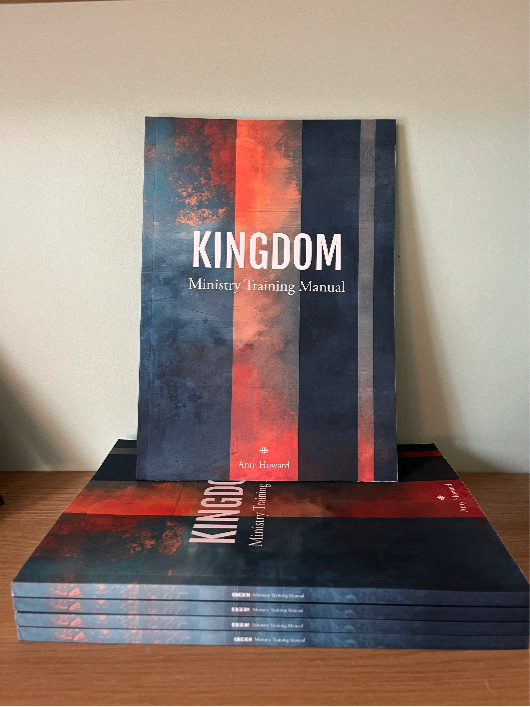 Prayer ministry training
KingdomMinistry Training Manual
by Amy HowardMove beyond fear into a courageous life of faith.
 For church leaders
Encounter BuilderCreating & Sustaining Cultures of Transformation
by Amy HowardBuild a community where renewal is normal.
 A 12-week journey
EncounterLifeParticipant Workbook
by Amy HowardGet in the way of being loved well.
 For cohort leaders
EncounterLifeWorkbook: Coaches' Edition
by Amy HowardLead your group through EncounterLife with confidence.