
Episode 32
Kingdom Ecclesiology: Big Church, Little Church—Doesn't Matter, Do These Things!
Show Notes
In the second episode of their Kingdom Ecclesiology series, Justin and Amy Howard ask what the church is at its core. They name how much weight has shifted onto the Sunday morning service, with its expectations around preaching, music, slides, and being seen by the pastor, and how that can create resentment, transference, and spectator Christians. Drawing on their experience as church planters and Amy’s Anglican tradition, they explain that pastors are not an embodiment of Jesus but of the church, and that the people are the church. They return to Eden’s mandate to fill the earth with the knowledge of God’s glory and propose an “ecclesial minimum” drawn from Acts 2:42–47: worship, community, and mission. Whatever the size of your church, they say, these things can happen in smaller expressions, extended-family-sized gatherings where gifts are drawn out and people are known. They close by inviting listeners to find their mission where their passions, gifts, and context intersect, and introduce ECMC’s EncounterBuilder pilot.
In This Episode
- Sunday morning has taken on more weight than it was ever meant to carry, and that can wear out pastors and keep members from growing.
- Pastors are not an embodiment of Jesus; they represent the church, and the people are the church.
- The church carries Eden's mandate to fill the earth with the knowledge of the glory of God.
- Worship, community, and mission are the 'ecclesial minimum' wherever the church is present.
- Acts 2:42–47 offers a simple picture of church life that can happen in any size gathering.
- Smaller, extended-family-sized expressions are greenhouses where gifts are drawn out and people are truly known.
- Your mission is where your passions, gifts, and context intersect.
Going Deeper — Discussion Questions
- What do you most expect from a Sunday morning service? Where did those expectations come from?
- How might putting too much weight on Sunday morning affect pastors and congregations?
- What does it mean to you that 'the people are the church'?
- Read Acts 2:42–47. Which of these practices are strongest in your life right now? Which are missing?
- Where do you experience worship, community, and mission together?
- What could a smaller, extended-family-sized expression of church look like in your life?
- Where do your passions, gifts, and context intersect? What might that reveal about your mission?
Full Transcript
▸Hide transcript · 52 min episode
0:03Introduction
Welcome to Between Heaven and Earth. We're your hosts, Justin and Amy Howard. And together, we lead a mission agency right here in beautiful New England. We are thrilled that you've joined us. In each episode, we'll explore what it means to follow Jesus by bringing heaven and earth together in your family and community. Our goal is to empower you to thrive in the collision of kingdoms and courageously join with Jesus in his great project of healing and restoration. This podcast is brought to you by Encounter Culture Mission Collaborative, dedicated to working with ordinary followers of Jesus to mend, make, and multiply disciples right where they are. Let's dive in. Welcome back to Between Heaven and Earth. It's exciting to be back here again. And we've been spending the last our last episode and today and probably a couple episodes in the future just discussing and reimagining what is church? What is the church? What does it mean to be the church? What should or could or shouldn't the church maybe be? Just to begin to kind of think around those questions.
Before we get started, I just wanna remind you that this podcast is sponsored by donors, sponsored by people like yourself. If you love what you hear here and you wanna contribute to making this available to our listeners, you can hit the giving button down at the bottom in the in the show notes. I see Justin smiling at me. It's actually a link, it's not a button. Yes, it's a link. The other day I was talking to somebody and I said Facebook, like generically meaning social media. Yeah. And the person was under thirty-five and looked at me like I had not only grown another head, but the head had white hair.
Yeah. Well we're not far away from that. Grief. Anyway, so we would love to partner with you. If you'd like to give, you can click the link, not the button, at the bottom of the episode. But as we get going today, so the what we're looking at is in a lot of churches today, pastors are expected to be the spiritual Swiss Army knives. They're the preachers, they're counselors, they're administrators, they're vision casters, they're caretakers of everybody else's calling. And at the same time, Congregations often find themselves waiting. They're unsure how to use their gifts. They're waiting for the church to create a sandbox to play in, you know, unless there's a program for me that to serve at that fits the unique kind of gift set that I have, then my gifts aren't being used. I'm dying on the vine. And there ends up being just a lot of frustration and even cannibalism.
3:14Resentment and the Sunday Morning Load
Right, yeah. Resentment toward leaders. Resentment toward leaders and a sense that the system itself in the church is the thing that needs to change in order to make sure that gifts are being empowered and people are being released. And some of those things may very well be true, but sometimes that ends up looking like my I think I told you this my parents had an Aussie in d in a city. They lived in a town, in an in town house. It wasn't a big city, it was a small town, mid size. There were no fields for the Right. I mean a little postage stamp little postage stamp. And they bought a an Aussie, an Australian shepherd. And I mean, these are sheep herding dogs. They're used to having a real serious job that lasts all day long and is highly active. And this dog, when it was younger, if it didn't get enough exercise, would literally chew the walls. It would begin to destroy its own living environment because it was just so bored and in need of something to do.
And I think a lot of times parishioners are kind of like Aussies in town. The Holy Spirit, the energy, the glory, the a God who is a centrifugal force of love, l always moving outward to reach the lost, to love well, lives inside of them. The Holy Spirit and the energy of the Holy Spirit, the zeal lives inside of them. And they don't know what to do with that, with that. Need to create and change and move or be seen or do and activate those gifts. And so a lot of times I think it results in eating the walls of the church. Yeah. I mean I think that I think that we really have some you know of course you have people that are naysayers in a congregation, right? I mean if you any family has that. I mean they have the folks that wanna challenge every rule, every boundary, whatever. Just challenge that. Right. But I think a lot of some kids like that. Yeah. I think I like I think a lot of churches you inevitably have people that are
For the sake of needing to be. You know, when we consider the fivefold ministry in Ephesians chapter four, you have people that are more on the pioneering end. So those are the apostles, prophets, and evangelists. And then you have the pastors and teachers on the settling end. So we like to delineate between the two that you have pioneers and settlers. And the pioneers are people that really want to go for new territory. So if you are in a church and you know that, you know, maybe there are a few people, man, we're just not reaching out enough. What are we gonna do about outreach? What are we gonna do about dah-da-da-da?
And that can you know, that can irritate some people that are more pastoral or more teaching because they feel like, man, I'm always being we're always being pushed to do more. But what if what we did as church actually honored those gifts and released them and coached them? Instead of kind of expecting the whole church to be on board with every activity, right. We kinda looked at well, what is what is our gathered space for? Yep. And what does it look like to be sent to try to engage new areas, to settle new areas, to love the community well. And maybe where are some of our misplaced expectations in a church community and how does that those how do those misplaced expectations
Become wearisome to pastoral leaders and how do they also prevent church members from actually growing? Right. Yeah. I think that I think that that's the key question. And that's what we want. That's what we want to explore. Because I think that the modern way of doing church, you know, and I want to talk to our New England context, but really anywhere, the modern way of doing church puts way too much of a burden on the lead person. Yeah. And that lead person is often called pastor, which is Probably not the best title for the lead person 'cause that lead person may not be a pastor. Can I make another suggestion too? Do we maybe put way too much emphasis on the Sunday morning gathering?
Absolutely. Absolutely. No doubt about it. Well, because I think it's something that we can control, number one. And number two, our culture expects Sunday morning. And they a and we expect it to be known really well. Why do we do that? Huh. So I think that what I think that unconsciously what we do is we've catered to a consumerist mentality that says, Preach at me, give me great music, give me a good message, good children's programme, good youth group, good whatever and we've created expectation. Good children's pro Well, it doesn't mean that excellence is that in the public gathering. But it is an interesting thing where it's like all of our missional energy gets concentrated on a two hour segment of our week. Right. Like our sense of belonging to the church body and being with and being on mission or being
No. Maybe two hours. An hour and fifteen is still getting When you were a kid, did they still have Bibles with the like zip jackets on Did at your church did you know that the sermon was about was supposed to have ended because people would start preemptively zipping up their Bibles? Yes. I can't say that I remember that, but I believe it. Yeah. I totally believe it. They did it in mind. You could just hear Bibles start zipping before the pastor was done if he went over time. That's hilarious. But yeah, I honestly think that Sunday morning is a sacred cow. I think I mean you know, when I was in parish ministry, I spent eighty-five percent of my time thinking about planning, administrating, dealing with questions and concerns about that hour and a half to two hours on Sunday morning.
I yeah, I remember that. I remember and the biggest problems were the problems that surfaced. Yeah. Cause you know, we were church planting, so we were space sharing with another church, which had, you know, presented its own unique challenges. But also, you know, folks' expectations and needing to organize volunteers. And when you have a church of, you know, between eighty to one fifty, you know, there are just some things that you can't do, like as a lead person. Like there are some things that I wouldn't do, for example, like I still don't know how. How to run a mic cable or how to like I because you know, I don't know how to run a soundboard. And I just decided that was one thing that I did not need to know.
10:00Expectations and Transference
But it's funny that there is an expectation. They don't cover that in seminaries. How to how to make PowerPoint slides or how to run your soundboard or Yeah. Or even how to manage volunteers. Or read a budget and a versus actuals sheet or Can imagine if you think the most important part of your Christian life is are those two hours. You can imagine there's a lot of intensity in that reality. I mean, if your whole week is the most important part of your Christian life and it's all like the whole thing is of in some ways equal value, your mindset might be a little bit different. I mean, if you've got to get it all in those two hours.
Then being seen by your pastor becomes of ultimate importance. And getting the kinds of music that you wanna hear becomes absolutely critical. And Well and it becomes, unfortunately, and I think this is this is sort of one of the unintended consequences. The person who's up front becomes the icon for the church. Say more because I think that's kind of intentional, isn't it? Well, in some ways. But that person becomes like the embodiment of God's ministry to his people. I mean In church history, isn't that kinda isn't that why the priests wear robes and Well in some ways, yeah. I mean we don't need to get down go down. Argue with it little bit. Like test it out a little bit for me.
Well, I think that there is I think there is something to be said for leadership. Like I think that leadership is important. And I think that the elders of the church embody not Jesus. I don't I think that I think that that's a falsehood. Well now, like, you know, in Catholic tradition, the priest stands at the altar in persona Christi. So they stand in like in place of Christ, in the person of Christ, ministering the sacraments to the people of God. And so There is an egg an exaltation of the priesthood there. And we talked a little bit about the bone the good sides of that and then the dangers of that and the our longing for fatherhood, our kind of mis the ways that provokes our transference expectations.
Right. And yeah. And there's a bunch of transference that gets poked when the in persona Christie, the person and now this happens in evangelical churches too. You're right. You've got the amazing communicator up front who no one has ac access to because they absolutely can't do it. Like they're too busy running an organization. Mean I s I remember somebody issuing like a real complaint. I mean this is a personal story but they submitted a an actual complaint that said you meaning you, Justin, you. I think the phrasing was like you were standing right there and you invited somebody to dinner and you didn't invite me. Yeah. Those are those are great kairos moments for everyone, isn't it? Aren't they? You know, th the it just it just is.
But the weight the weightiness of that. They're like, I man, in that moment, that was so hard for somebody to experience the that like you being that person and not seeing them. Seeing them in the way that they wanted to be seen in that moment caused that caused for them was experienced as genuine pain. Right. And not seeing them, right? Absolutely. Yeah. Yeah. And I think that as pastors, our job isn't necessarily to minister to that directly. I think that as pastors our job is to ask the questions that help them process their unmet expectations in Jesus. Ooh. And I think that where pastors burn out is that they there's this codependent thing that happens where like
You're upset with me, I need to fix it. I need to be something for you that really only Jesus can be. And I think that is like there are that doesn't give you license to be a jerk, right? It doesn't give you license to be dismissive or unresponsive. But it means that as a leader, you're creating culture where folks know their own heart. And there's language and expectation that when our expectations are not met, the first thing we do is we go to Jesus and we let him minister to the places of unmet need and expectation. But I do think that what we've done is we have certainly set leaders up for a lot of unnecessary burden. And they become the embodiment of Jesus to us. But I
14:53Pastors, Robes, and Representing the Church
I have always believed though that even like with the robes, so as Anglicans, like you know, we wear robes or I have always believed that those things that I'm wearing are actually indicative of what we are all wearing in the spirit, and that I am not standing in persona Christi. I am standing in persona ecclesia. Like as a mirror. I'm showing you who you were Knowing you who you really are, and I am standing as an embodiment of the church, of the church's come on, of the church's mission, of the church's message, of the church's you know, as a foretaste of the kingdom. Like this is not and this is this goes for anyone. You if you don't wear robes on Sunday, fine. If you're the senior leader though and people see you there,
You are not an embodiment of Jesus. You are embody you are embodiment of the church because the church has said, we see the call of God on you. And you are not Jesus to us, but you are the locus of unity and the person who is teaching us how to be the body. How to be us. That's right. Yeah. You know, you're not, you know, you're equipping us. How to be us. You're not just ministering to us, you are equipping us so that we could be we can be And who we're really called to be. Yeah. I love that. That's so different. Yeah. Amen. So I think that that's what elders do. I think that, you know, in our in the Anglican tradition a priest is a priest not in the Old Testament sense of, you know, in a sacred sense, but the priest
Say what that means, sacredal. Some people won't understand. You know that you're offering offerings to God as a as a mediator. Yeah. You in the New Testament, I think an elder is someone who has been tapped to represent the will of the body and to represent and to recognize what Holy Spirit is doing in the body of Christ. And to empower it and to release it and steward it. Absolutely. Okay. Help steward that absolutely. Yeah, and teach it and help it cultivate it, help it to grow. And I don't think that's just one elder. I think that that's a team. I think that's a group of elders. Well speaking of such things. Yeah. So could we could we transition a little bit into actually I would love to hear you talk into, speak into a little bit of what you believe the church actually is. Like if you if you stripped maybe not
Like the mystical body, the church. I mean, we w we are the church. The people are the church. You know, we say that all the time. The church isn't the building, the church is the people. Right. The church, what's that little song, right? The church is the resting place. The church is whatever. I don't even know. But so not that conversation, not the fact that, like, yeah, we all are the church. But if you stripped the fellow the gathering of believers down to its most essential components, like it's clear in the New Testament. People who have been born again, who are filled with the Holy Spirit, who are following God into the world are supposed to gather together. They're like they're meant to be together on some level. And if you stripped down that togetherness to its most essential component, like the things that matter the most when we're together, what still needs to be there?
For it to really matter. So we're saying like Sunday morning has gone way over the top in some places. And sometimes that's awesome. I mean you and I both love a great, well-running morning rocking Sunday morning service. So please don't you know, our pastor friends who f amazingly run large institutions, we're not throwing shade here. No. We really appreciate your gatherings. And we love to be a part of them and we love to participate in what's happening there. But for all of the churches of sixty people. That are out there or all of the people who are considering planting a church or who have a home fellowship, what are those the essential things? Like what makes a gathering really kind of a gathering of the body of believers and not just dinner together or f a fellowship time or a mission or even just mission. Like we can go on mission together and still not have it be an expression of being the church. You know, we can build houses together and still kind of leave Jesus out of it.
19:33What Is the Church at Its Core?
Yeah, sure. I mean I think so what is the church at its core? Yeah. So this is what we call ecclesiology. The coming you know, the Greek word ecclesia, which is the word that we translate as church, has and we mentioned this in the last episode, but just as a reminder, ecclesia is the called out ones. They are the ones that are called out who in ancient Greek Times were the polis. They were the ruling body that ruled over a city, a polis. And so the ecclesia is God's ruling body on the earth. Of his coming of his coming kingdom. So this is so this is linked with, if you go back to our very first episode of this podcast, linked to our identity as kings and priests from the Garden of Eden, right? This
Come on. This mandate to take dominion and to fill the earth with the glory with the knowledge of the glory of God. And Jesus has reconstituted this in the church. He's reconstituted Eden and Adam and Eve's you know their vocation in the body of the church. And I love what NT Wright says, you know, he says that, and this is what I think the church is at its core. I think that the church at its core is the working model of new creation. It is the working model of new creation. It's the microcosm of new creation. Of Eden. Of Eden. That's right. It's where we learn how to love and be loved. It's where we learn how to forgive and be forgiven. It's where we learn how to be confident and operate in.
Eden. The gifts that God has given us for the good of creation and for the good of one another. It is where the where the kingdom is made manifest. And so we are the body, you know. And Jesus so yokes himself with the body that he actually, you know, when he's when he knocks Saul off his horse on the road to Damascus, he says, Saul, why do you persecute me? And Saul was persecuting the church. And so We are the working model of new creation. We are the new humanity. We are the people that God has called out in order to manifest his domain and his reign in the earth and in our spheres of influence. And I love what Ephesians, what Paul says in Ephesians chapter one. He says that God placed all things under Jesus' feet and appointed him to be head over everything for the church, which is his body, the fullness of him who fills everything in every way.
I just I love that. We are the fullness of him who fills everything in every way. So I mean w th we have a really high calling, but when people look from the outside in, they need to see a people who love one another as we have been loved. So you're saying if that is our calling, that it is for us to work out as we are growing what it looks like to live the way life should be. Right. That's I love that your definition of the kingdom of God. The way The way life should be. Yeah. Which means, you know, if you go to, you know, the teachings of Jesus in Matthew, and you replace the kingdom with the way life should be, it just speaks so much more clearly. So, like, seek first the kingdom of God and all these things will be added unto you. Seek first the way life should be, and all these things will be added unto you, right? The way life should be is like a seed.
23:33Testimony from Church Planting
And I think so I think that, you know, that's what we are after in the church. But I would contend that this really doesn't happen very well on a Sunday morning at all. I think that a Sunday morning is meant to be the climax or the pinnacle or the celebration of the previous week's church living as the working model of new creation. I was just remembering this one hilarious Sunday, maybe about ten years ago, we're church planting and we had this rocking prayer ministry that, you know, people the prayer team was really f fiery and they loved actually, you know, praying for people and finding out where it hurts. And after we had a lot of visitors on a regular basis, both just curious seekers or there was a l large homeless population in downtown Bangor, so people would kinda wander in and out of the building where we were.
And there was this one Sunday that numerous people in the came to the prayer line after church and gave their lives to Jesus. Yeah. And I remember do you remember this? You know the story I'm telling? Yes. That several of us came like so excited up to you after service and we're like, Justin, you will not like three people gave their lives to Jesus today and you sighed this heavy sigh. This is embarrassing. But go for it. What did I say? No, but I don't think it was wrong. I think that it was the deep groaning in your heart, but you were like, Sun the that's not like the prayer line the prayer how did you articulate it? The prayer line is not the place where this is meant to be happening. Not that it's not supposed to you were like, This is what's supposed to be happening in homes. This is supposed to be happening during the week. This isn't just like it's Sunday morning isn't just about this reality. Right.
Yeah. Yeah. Right. And I think too, I was at that point I had this vision for what we're gonna be talking about, which is the ecclesial minimum. Like, what does it look like for the church to embody the working you know, the working model of new creation? Yeah. And that can't happen on Sunday morning at a at a large group gathering. It can't. Now like Certain pieces of it can like the word can be proclaimed, the sacraments can be administered, right? Like, people like people can receive prayer and the kingdom of God can be manifested, and that's beautiful. But where do you live the Sermon on the Mount? Yeah. You know what I mean? Like you can't live the teachings of Jesus on Sunday morning. Or at least
At least not in their fullness. Two hours of your week or hour fifteen. Right. Yeah. And so you know I really believe that if you're a church that's larger than forty or fifty people, like you can do you can probably do that in that in that model, like the like you know, what the New Testament calls oikas or households, where you can live a life of learning how to forgive and be forgiven, loved and be loved, right? Getting set free, confessional relationships. Working through the four R's of one another. 'Cause you can really get to know yeah, you know, twenty to forty people who really know you well. Taking care of one another when each other's sick, remembering each other's birthdays and anniversaries, celebrating one another, praying over one another, right? Like walking with each other in life, in the in the rhythms of life. In ways that can't necessarily be done on a Sunday morning. And so, you know, we talk about like what is the what is the church? Okay, so it's the it, you know, it's the microcosm of the new creation. But when you reduce it to the like bare bones.
27:36The Ecclesial Minimum: Worship, Community, Mission
I think there are three things. There's worship, there's community, and there's mission. I think that's the ecclesial minimum. Where that is happening, that's where the church is. Hey there, pastors. Are you feeling the weight of leadership? Do you crave a space where you can truly be yourself away from the demands of ministry? We understand that leading a church can be exhilarating, but it can also be exhausting and lonely. That's why we want to come alongside you as you encounter life. Welcome to EncounterLife for Pastors, a 12-week journey designed to offer you the high trust, high support small group experience you need. Each group consists of just four to six pastors, led by ECMC's Executive Director Amy Howard, a doctor of ministry candidate and trained spiritual director, providing a confidential space for you to be known not just as a leader, but as a person. In your EncounterLife cohort, you can expect safe relationships, spiritual renewal, personal growth.
And accountability with grace. Each week we'll ask two simple search-in questions. What is God saying to me? What am I going to do about it? And the best part? You'll be surrounded by fellow pastors who truly understand the weight of leadership and our need for healing. Together, you'll walk this journey of transformation, reconnecting with your identity in Christ, and listening for God's voice again. EncounterLife for Pastors is more than a program. It's a space to heal, a place to be seen, a time to remember who you are and whose you are. Space is limited and cohorts begin this summer and early fall. So if you're ready to encounter life and experience true transformation, visit encounterculturene.com to learn more and join a cohort today. Because shepherds need shepherding too. You deserve this.
And so like in the thirty nine articles of religion for the Anglicans. It's There we go. The church is present where the w word of God is purely taught and the sacraments duly administered. Okay. Like, well that that's fantastic, but that's such a Christendom like definition, you know? Yeah. It's such a Christendom def well, you know, we are in Christendom. Who says duly? And duly. And No one says do well. You know, that it's obligated. And in like kind in both kinds. In both kinds, yeah, both the wine and the bread. Yeah, so you know, th those three things I think constitute the patterns and rhythms of church life. It's worship, it's community, and it's mission. So I know if you want to do a deep dive into both into all three of those things, just to like because community is genuine fellowship, it's mutual care, it's
Reaching the unchurch, it's making disciples, or you know, or celebrating one another. And then mission is engaging God's work, serving the needy, reaching the unchurch, making disciples. But there's this community, there's worship happening where the gospel's being proclaimed, people are experiencing God, they're honoring Jesus. And so yeah, I just I think that those happen best in groups of like 50 or less. But you can have larger expressions where those come together. Okay, so you're can I repeat this back to you and see if I'm hearing you clearly. So you're saying our capacity to recreate Eden is only as big as our ability to have good relationships. Absolutely right. And only really as and we can only really do the bare minimum of worshiping together, although we can worship in large groups, but doing community and going on mission, the that there's
31:17Extended Family Gatherings
That's absolutely There's only a certain amount of intimacy you can have that's really recreating e the potentials of Eden with a certain number of p like there are only so many people that you can really do that well with. And that doesn't mean that you don't have giant worship gatherings or go on mission with three hundred people instead of just fifty. Yep. But over the long haul, like the day in and day out, you're saying that the ex that church itself, the life of church is lived out in In smaller ways. We don't like that. I don't I wouldn't like it, right? I mean, I just you hit send on your Instagram account, you forward a post, and now your audience is massive. I think we have a constant sense that I mean, unless what I'm doing has global impact, or I'm raising awareness, or I'm making a huge difference right now, that I'm not really doing what God has called me to do, or I'm called to greatness, or whatever that is. But the idea that my
Most of my expression as the ruling body of the way life should be is gonna be lived out in a group of twelve to fifty people. Is that what you're saying? Yeah. Correctly. Well, you think about the New Testament church and what the apostles are writing to. So these are all letters, right? First, Second Corinthians, the pastoral epistles. These are all letters that are written by the apostles to churches that are that are not meeting in public spaces. They are churches that are meeting in households. And the Greek word is oikas. So the oikos or the household are the people that are, you know. The patriarch and matriarch, plus their kids, plus their kids' spouses, plus the servants, plus the people that are doing business with them on a regular basis, extended family, and that could go up to 40 or 50 people. So those are the those the context that these letters are being written to. So First Corinthians 12 through 14, when Paul is addressing the gifts of the spirit and what's happening in their gatherings, with their agape, their love feasts and their and their corporate worship.
This is all for like extended family gatherings. So think Thanksgiving. You know, when your house is filled with extended family and friends. That is the context that Paul is writing to. And that's what the early church experienced before, you know, before Constantine, the legalization of Christianity, that there that these were homes that were gathering places where these ecclesial minimums were taking place and predictable patterns of worship. Of mission of community life. Huh. It almost feels I d I don't know. I mean, the idea that a good chunk of these people could all be related to one another. Yep. But Jesus and his disciples and the early movement, the burgeoning movement of the church, a good chunk of that set were related to one another. I mean, Jesus and John the Baptist, Peter and Andrew. Peter and Andrew, Mary and Elizabeth, and I mean, there was a lot of this that was kind of in the family. James and
Absolutely. I know. Jesus' brothers, right? Jesus' brothers and sisters, yeah. Family. There's a lot of family. And if you look at it from a theological standpoint, family really is the it is the locus or epicenter of God saving activity. Come on. Right. I mean you start with the family of the Trinity, Father, Son, and Holy Spirit. You look at Adam and Eve and their offspring, Noah and his offspring. There's just there's a lot of family There's a lot of family happening. Abraham, the entire world is saved through Abraham's family. Yeah. You know, because they give us Jesus. The royal the royal line of David, right? So Jesus has extended family, right? He has the three, which are his closest. He has the twelve. He has a seventy two. And on Pentecost, it's grown, you know, there are a hundred and twenty. And then
And then Jesus came. And they're not all related by blood or marriage. No. There is a sense of this is the new family, but there still is a sense of family. This is this is family. Right. Right. You think about it like, you know, for those of you that have a nuclear family, you know, where does where do people see you at your worst and at your best? You know, where do you have to coach one another? Right. Where do you have to coach like where do you experience insecurity? Where do you experience frustration, exasperation? Where are some of your deepest wo woundings? Where Thanksgiving. Where are some of your deepest wounds?
Where do you desperately want to be known and affirmed? It's the people that know you best. And I think that you know, that's where you get to practice relationship. Family is the it there it really is the fire, the furnace of sanctification. It's the furnace of becoming holy. And for those of you who don't have nuclear family, we all have Friends and close family and extended family that we're called to do life with because those are the people that are gonna recognize the gifts and graces in our life and call us into who we are. Love that. I love that. I love that. Well, amen and amen. I mean that sounds like that sounds like a like a full kind of sense of what are what can you just say again what so the ecli just so we're really clear, the those minimums that make up the tr when we gather together. I don't know if we really f really got to the so when we gather, yeah, what needs to happen when we're together for it to really kind of be
Yeah. An expression of the church body. Is there a need for certain things to be present, at least some of the time? Yeah, I mean, I you I think that gathering on a Sunday morning, let's say you have a thousand people, you know, I mean, the word of God is preached, worship is happening. On a certain level, there is community, but it's like you n it's now like you've got to like the aperture has widened and you're able to see hundreds of people and what God is doing among hundreds of people, not just your extended family, right? So there is a sense that my community is bigger and you're hearing testimonies on Sunday morning and you're celebrating what God's been doing.
So I think there is a level of community happening there. And then mission two, right? I mean, people come through the door, they get ministered to on a s on a Sunday morning. And so all three of those things can happen on a larger scale Sunday morning. I actually think that a larger scale s Sunday morning is really important for inspiration, for motivation, for people seeing what God is doing, and in the larger region. But I think that it's the s it's the microcosms, the smaller places where we get to minister to one another, lay hands on one another, visit one another when we're grieving, visit each other in the hospital. When the extended families take that on, it becomes less of what's the ministry that we're offering to people that come through the door on Sunday morning? Cause what we're doing is we're still treating people like consumer is consumerists, right? It's like you're gonna come forward, get some healing prayer at the end of service and then go back.
To your life. But what if what if we created greenhouses of this kind of life together, where people's gifts are teased out and they're challenged to grow in their gifts and to hear Jesus and to minister to their extended family and to their coworkers and beyond. So a lot of people I think I've heard a lot of people s sort of hearken back to Acts two when they're looking at minimums. What do you feel about that as a s as a kind of baseline? Do you feel like that's helpful? Do you feel like, all right, well that's what was happening then? You know, does it carry over to today? And maybe you can flush that out a little bit.
39:52Acts 2 as a Starting Point
Yeah, I mean I think the Acts chapter two is forty-two through forty-seven is the is the ecclesial minimum. You know, where Luke says that they gathered in one another's houses, they broke bread with gladness of heart, right? They listened to the apostles' teaching, they devoted themselves to apostles' teachings, the fellowship, the breaking of bread into prayers. Those four things. And the breaking of bread. Was probably the Lord's table. That was a part of a larger kind of feast together where, you know, you're eating with one another. But you're also remembering the Lord's death. You're also remembering the Lord's death until it comes to again because he is the locus of our unity. He is the one who's making all things new. And it was and it is through him that we offer thanks. And he's in and he's you know, as we offer thanks, he gives us power to recreate with him.
So you think that's maybe a good starting point? Like if you're like, man, I want to plant a church or I want to begin to gather with a group of believers and say, what does Eden in my community look like? What would it look like to really do life together? Even, you know, maybe you go to a larger church and you're kind of sitting in the back and there are eight hundred people there or eight thousand people there. You're like, Where do I where do I find that eat you know, opportunity to recreate Eden as the new creation? That Acts two passage may give you something to start with. Yeah, that is the small working model of new creation. That's ecclesial minimum. That's where you get to practice the gospel of the kingdom, the way life should be.
So gathering, worshiping, hearing the teaching, sharing a word. Gathering, worshiping Yeah, sharing a word. You know, look at reading this first Corinthians twelve through fourteen, right? Like you all come with something. There are in and you know, maybe for a season, some people really don't have that much to give, but maybe they come with food to share, right? But they come with thanksgiving. Or, you know, we've done this before, you know, in house church where new people will come and we're like, okay, we're all just gonna give thanks. You know, well, what are you thankful for this week? And we go around and everyone ha gets to say something they're thankful for. Even people that don't know Jesus. Right. Right? Right. And they they're still coming with a word of thanksgiving. And so, you know, right from the get-go, people need to know that God is at work in their lives right now and they have something to contribute.
Hm. I love that. That seems like a real healing balm to some of that Swiss army knife mentality that I I'm yeah I don't have anything to give. I don't have anything to contribute or it's up to somebody else to give me something to do. Yeah. Yeah. I guess if the environment's small enough, there's probably gonna be plenty to do. Absolutely. Plenty to do. Absolutely plenty to do. And I think we make a mistake when, you know, we say to when someone says, Hey, can I bring anything? We're like, no, that's okay. People want to bring something because they want to know that they're doing that. Stop doing that. So if you're, you know, you know, someone's an unbeliever or whatever, just say, yeah, come grab a salad or grab a level of bread or something. Bring it to bring yourself. You know, that people want to contribute and they wanna be a part of something.
My gosh, yeah. Stop doing Yeah, grab a salad. Yeah. And so we're we are saying, Hey, come and belong. Yeah. Come and belong. And so this is I recognize that for some pastors, like there's man, I could never get my people to do this. How is this even gonna happen? You know, I feel like I'm the epicenter of life for this congregation. That's how I used to feel. Yeah. And I felt like, man, some like That's how you used to feel. It's just hard for folks that have been in the church for a long time to even dream or imagine that they can do something else other than plug and play on a Sunday morning. Wow. You know, it's like you get saved, and then maybe you go to a baptism class and then we plug you in to serve somewhere on Sunday morning.
44:10Finding Your Mission
Yeah. So you just you go to church, you sit in a pew, maybe you do your rotation in the nursery or you're Right to clean the facilities or you know, like you're serving the church in some way. But yeah, I think that is Right. What does it look like for you to serve and be served in a community of love? What does it look like for you to be part of bringing Eden? Yes. Yeah. Yeah. In your context. In learning to live in Eden in your context. Not that your world is going to be a perfect world, but if you are called to be a conduit of the kingdom of God, right? You're called to pray, your kingdom come, your will be done on earth as it is in heaven. So you are you're a sleeper cell of Eden wherever you go. So you're learning how to live Eden. And that Eden is not just confined to those hour and 15 minutes, two hours on Sunday night.
Mm-hmm. But like what you said, just to go back to what you said at the beginning. That's why these smaller expressions are so vitally important. We were called to make disciples, not converts. Come on. Right. Like that's Matthew twenty eight. And then Jesus says in John chapter twenty, which is the second great commission, as the Father has sent me, so I'm sending you. And I was working with a I'm working with a church right now with fifteen hundred, two thousand people. And some of the team were like, Man, you know, I've just I w I'm kind of discouraged that people like, yeah, you know, I've come to an encounter weekend and I went to the training and that it was great, you know, really loved it. So I don't really need to do it again. But the question was, well, you know you like
You go to these things to get healed. Or the statement was you go to these things to get healed and then you get trained so that God can use you. And that was the like mend, make and multiply disciples that in counterculture teaches, which is man, now where the I don't want to say containers, but the expressions, the atmospheres, the environments where now people can be a blessing. Where can they practice what they've experienced and what they're learning? In a naturally supernatural way. And I I'm just thinking, it maybe as we're kind of wrapping up this episode, I'm thinking it's you can ask God, where are you calling me to do that? Yeah. You don't have to wait for somebody to offer you a microphone or a position at a church. And in fact, I if I could encourage you not to wait. Don't wait around.
Yep. Mm-hmm. For a sign from the sky or your pastor to give you a job, start asking the Lord, God, where would you have me? Where is Eden missing? And I'm called to be a conduit of a portion of that. I'm called to live into the tension of bringing heaven and earth together. In where? What does that look like for me? Yep. And I mean, God's good for it. He's actually a part of this conversation. He's not That's really great. Yeah. He's not he's not irrelevant to I he didn't just kinda like fill you with the Holy Spirit and then say, Well, good luck. You know, I hope you figure out how to you how to how to walk this thing out. He wants to give you a mission and a calling. Yeah.
And we all we all have a mission and I think that our mission is where our passions, our gifts, and our context intersects. What's what are your what are you passionate about? What are your gifts and what's your context? And where those three things intersect, that's probably going to be your mission. And sometimes it's just the very real need in front of you. Like I never felt like any of those three things aligned when I was changing diapers at two AM. Sometimes it is just the next right thing. Absolutely. Yeah. Yeah. But you still ministered to people that came over to the house as they as they sat on the couch or as you were making dinner, you ministered to them in the kitchen, right? You had conversations with them. And so you did what your context allowed for you to do. And so I think that your passion, your g like you were still on mission with Jesus in the way in the in the capacity that you had at the time. And so and we just we want for you to know the our listeners that you do have a mission.
And it and it is where your gifting and your passion and your context intersect. And so as Amy said, pray about that. Don't wait for your pastor to create a sandbox for you. Don't relegate it to Sunday morning only. You have permission in the kingdom of God. This is kingdom ecclesiology we're talking about. You know, you have mission in the kingdom of God to discern with the Lord. What does it look like for you to embody his presence where you're at right now? And even as you're waiting on the Lord for those things to take shape, you can do the next right and good thing in the presence of the Holy Spirit. Because that next right good thing is part of the mission. So that diaper at two AM is the mission. Yep. It's not just waiting for the, you know, those three things to align, but do be asking God, where would you call me? What do you what do you have for me? Where, you know, what are my gifts? What have you given me to do? Or, God, I want.
More. I want more than I have received yet. And I want to walk in those things. And if you're a leader in a church, maybe you're a pastor, maybe on your you're on staff, maybe you're a lay leader. You're like, man, I would love to figure out how to install this in our church. Like, just this type of thinking to release and empower the edges of the kingdom. We have something called EncounterBuilder. And EncounterBuilder is a two-year community of practice where we walk with you and your church to coach you to install these rhythms and practices to free and liberate the people of God to do what God has called them to do. This isn't about adding a new program to your church, it's about installing practices and rhythms.
50:37EncounterBuilder and Closing
Rhythms and what you already do. Alright, so we we're excited about EncounterBuilder and we're going to we we've been doing a pilot with a number of churches over the last year and a half and we'll be opening it back up in a few months from now. You can go to our website, encounterculturene.com, to look at EncounterBuilder and we'd love to hear from you. Thank you for joining us on this episode of Between Heaven and Earth. We hope that you were stirred to curiosity and courage as we explored bringing heaven and earth together right where you are. Remember, you're not alone on this journey. We're here to support you in understanding what the Spirit of God is doing in your life and responding in obedience to his good leadership.
If you enjoyed today's conversation, please take a moment to like, share, subscribe, and leave a review. We'd love to hear from you. Share your thoughts and questions with us on our Facebook page or by email, podcast at encounterculturene.com. Your support helps us reach more people who are eager to join Jesus in his great project of restoration. Also, check out our website, encounterculturene.com for upcoming events and equipping opportunities for you and your church. Until next time, may you find joy living in between heaven and earth and the courage to bring them together wherever you go.
Resources to help you go deeper
Tools for healing prayer, discipleship, and building cultures of encounter, for individuals, small groups, and whole churches.
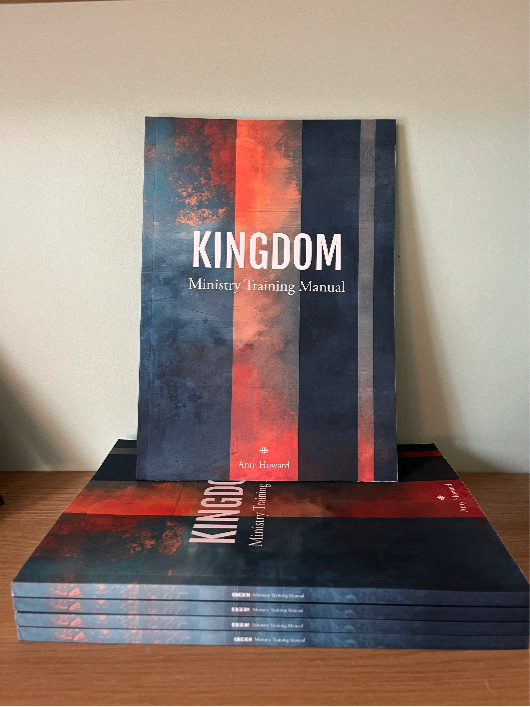 Prayer ministry training
KingdomMinistry Training Manual
by Amy HowardMove beyond fear into a courageous life of faith.
 For church leaders
Encounter BuilderCreating & Sustaining Cultures of Transformation
by Amy HowardBuild a community where renewal is normal.
 A 12-week journey
EncounterLifeParticipant Workbook
by Amy HowardGet in the way of being loved well.
 For cohort leaders
EncounterLifeWorkbook: Coaches' Edition
by Amy HowardLead your group through EncounterLife with confidence.